
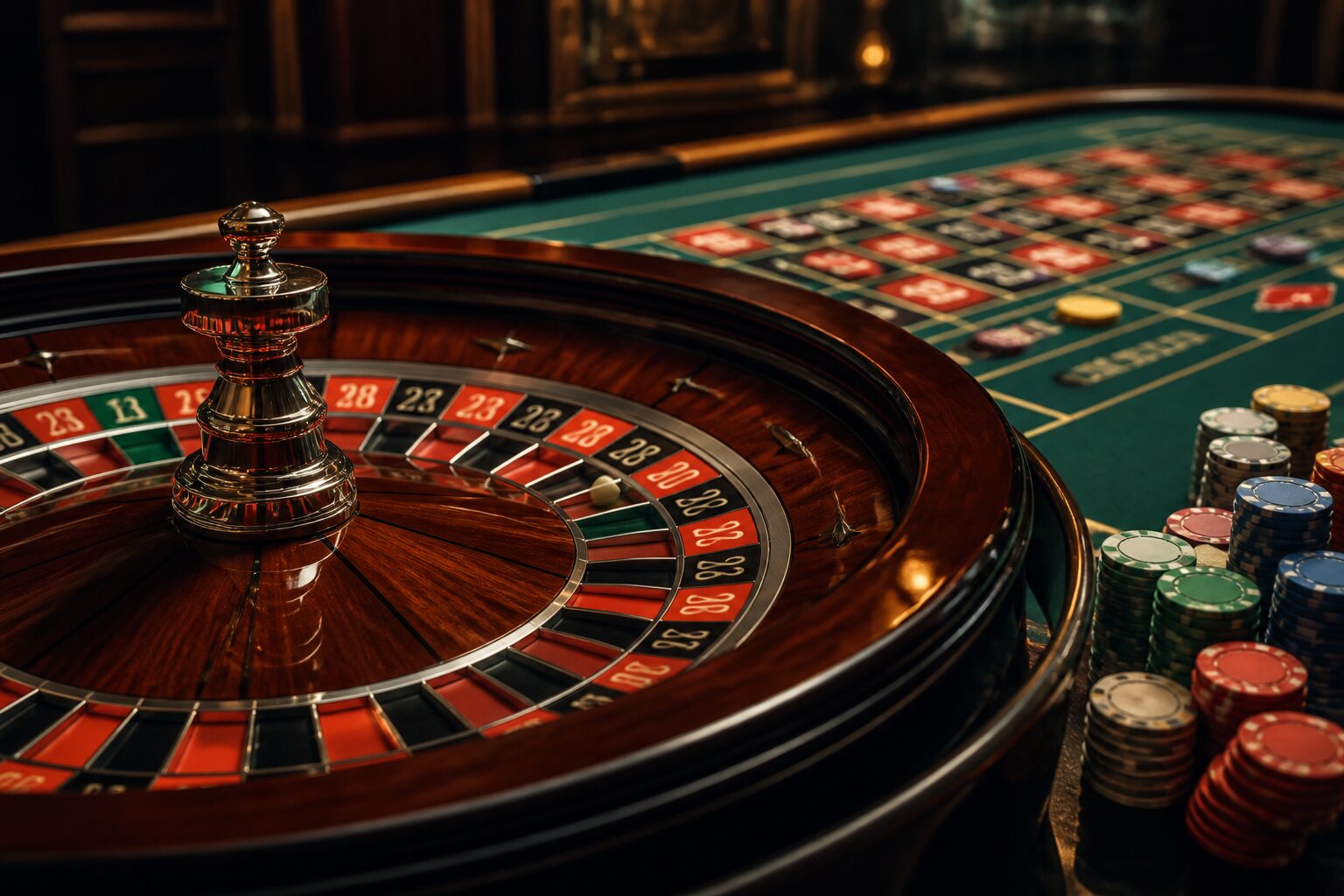
Ever wondered why French Roulette remains a favourite in casinos and online? This version combines a familiar wheel with a few distinct rules that change how some bets are handled, giving the game a different feel from other roulette types.
Whether you’re new to roulette or want to understand what sets the French table apart, this guide walks through the wheel, the bets and the special rules so you can play with confidence. Read on to learn the essentials and what to expect at the table.
Ready to get started? The next sections break down the wheel, the bets and how a round typically unfolds so you know exactly what happens each spin.
What Makes French Roulette Unique compared to Other Versions?
French Roulette shares the single-zero wheel with European roulette, but a couple of features make it stand out.
The most important difference is how certain even-money bets are treated when the ball lands on zero. The rules known as La Partage and En Prison offer alternative outcomes for those bets, which effectively reduce the house advantage on those specific wagers. The layout on the table also uses French terms and includes a racetrack-style area for the special wheel-based bets, which aren’t commonly offered on other tables.
The wheel itself keeps the standard 37 pockets and the same set of numbers, but the table presentation and those special rules give French Roulette a distinct strategy and pacing compared with European or standard American tables.
Now that you know what distinguishes it, let’s look more closely at the wheel and why its layout matters.
Understanding the French Roulette Wheel Layout
The French wheel contains 37 pockets: 0 through 36. The single green zero separates the red and black numbers, which are otherwise evenly split.
The sequence of numbers around the wheel is arranged to spread high and low values, reds and blacks, and neighbouring numbers in a way that avoids simple clustering. This arrangement helps keep each spin independent and prevents easy visual patterns from forming. Each pocket has an equal mathematical chance of being the result of a spin.
If you’re new to the table, the racetrack-style betting area beside the main layout maps those wheel neighbours and is used for the special sector bets unique to French Roulette. Understanding how the wheel and racetrack correspond will make it easier to choose those called bets confidently.
With the wheel understood, the next section explains the full range of bets and how payouts work.
How Do French Roulette Bets Work?
French Roulette uses the same broad categories of bets as other roulette versions, with each bet carrying its own payout and probability. Bets are placed before each spin and resolved once the ball lands.
Broadly, bets fall into two groups: those placed on specific numbers or small groups on the main layout, and those covering larger portions of the table. There are also the called bets that use the racetrack to cover sections of the wheel itself. Knowing which bets are available helps players balance risk and reward according to their preferences.
Below is a clear breakdown of the most common bets, how they differ and what they pay.
Inside Bets vs Outside Bets Explained
Inside bets are made on single numbers or small clusters on the main layout and offer the highest payouts because they cover fewer outcomes. Common inside bets include:
- Straight up: a single number, pays 35:1.
- Split: two adjacent numbers, pays 17:1.
- Street: three numbers in a row, pays 11:1.
- Corner: four numbers in a block, pays 8:1.
- Six line: six numbers over two rows, pays 5:1.
Outside bets cover larger sets of numbers and return lower payouts, which makes them steadier options:
- Red or black: covers all numbers of the chosen colour, pays 1:1.
- Odd or even: covers either all odd or all even numbers, pays 1:1.
- High or low: covers 1–18 or 19–36, pays 1:1.
- Dozens: covers 12 numbers, pays 2:1.
- Columns: covers a vertical column of 12 numbers, pays 2:1.
Each bet type changes the balance between potential return and the chance of winning, so players often mix inside and outside bets to suit their style.
What Are the Special French Bets?
Called bets, sometimes referred to as French bets, use the racetrack to cover wheel sectors rather than table positions. These cover groups of numbers that are close together on the wheel:
- Voisins du Zéro: 17 numbers near zero.
- Tiers du Cylindre: 12 numbers opposite zero.
- Orphelins: the eight numbers not covered by the other two groups.
- Jeu Zéro: numbers immediately surrounding zero.
Placed via the racetrack area or by announcing them to the dealer, these bets can appeal to players who prefer sector coverage rather than number-by-number selection. They add variety without changing the fundamental probabilities of the wheel.
Next, we’ll explore how La Partage and En Prison alter the treatment of even-money bets and what that means for players.
The Role of the “La Partage” and “En Prison” Rules
La Partage and En Prison are the two rules most closely associated with French Roulette, and both only affect even-money bets when zero appears.
La Partage returns half the stake to the player when an even-money bet loses to zero, while the casino keeps the other half. This change lowers the effective house edge on those bets because the player recovers some of their stake instead of losing it entirely.
En Prison offers a different outcome: the bet is held for the next spin. If the bet wins on that following spin, the original stake is returned without extra winnings; if it loses, the stake is forfeited. This can be thought of as a temporary pause on the stake, offering a second chance to break even.
Both rules change how zero affects even-money wagers and make those bets relatively more favourable compared with tables that treat zero as a full loss. Understanding which rule the table is using helps players decide how to place their even-money bets.
With that clarified, the next section describes how a typical round plays out so you know what to expect at the table.
How to Play a Game of French Roulette Step-By-Step
A round of French Roulette unfolds in a predictable rhythm that centres on placing bets, watching the spin and seeing the result resolved. Players put chips on the betting layout or use the racetrack for called bets while the dealer or software prepares to spin. Once betting is closed, the wheel is spun and the ball released; it then travels until it settles in a pocket.
When the outcome is decided, the dealer or system announces the winning number and colour, and winning bets are paid according to their respective payouts. Lost bets are removed from the table and a new round begins. Throughout, players can adjust stakes and bet types between spins.
Experienced players often use this rhythm to manage their session: choosing bet types that fit their preferred balance of risk and return, and watching how the table rules such as La Partage or En Prison will affect even-money outcomes. Keeping to a budget and setting personal limits helps make the experience sustainable and enjoyable.
Having covered gameplay, the next section answers common questions about French Roulette.
Common Questions About Playing French Roulette
Is French Roulette harder to play than other versions?
No. The basic mechanics mirror other single-zero roulette tables. The main learning curve is the racetrack layout and the French terms for called bets, which are straightforward once you’re familiar with the wheel.
Can I use betting systems to guarantee wins?
No system can alter the mathematical odds of the wheel. Betting patterns may structure how you place wagers, but they cannot change the underlying probabilities or assure a profit.
Are the odds different in French Roulette?
The wheel uses a single zero, like European roulette. The La Partage and En Prison rules can improve the return on even-money bets compared with tables that don’t use those rules, but they don’t change the basic distribution of outcomes.
Do I need to learn French to play?
No. The terminology can be explained at the table, and most layouts use clear labels or symbols to show where bets are placed.
Is it safe to play French Roulette online?
Choosing a regulated, licensed site provides protections around game fairness and account security. Look for clear licensing and published fairness information when selecting where to play.
If you have questions at a table or online, staff and site help pages can clarify rules, payouts and available bet types so you can play with confidence.
French Roulette Myths: Separating Fact From Fiction
Roulette attracts plenty of folklore. Separating fact from fiction helps set realistic expectations.
Myth 1: Certain numbers are “due” to win
Past spins don’t influence future ones. Each spin is an independent event and probabilities remain unchanged.
Myth 2: Betting systems can “beat” the game
No sequence of bets can alter the house edge. Systems may organise play but cannot guarantee success.
Myth 3: Rituals or routines change outcomes
Personal routines might make a session feel more engaging, but they don’t affect the mechanics of the wheel or change results.
Myth 4: French Roulette pays out more than other versions
Unique rules can affect how certain bets are settled, but they don’t produce a guaranteed increase in returns across the board.
When in doubt, refer to the table rules and payout schedule so you know exactly how each bet will be treated. That clarity is the best antidote to confusion.
We hope this guide helps you understand what makes French Roulette distinctive and how a round typically works. If you’d like to try a game, check the table rules first so you know whether La Partage or En Prison applies and you can enjoy the experience with clear expectations.
**The information provided in this blog is intended for educational purposes and should not be construed as betting advice or a guarantee of success. Always gamble responsibly.