
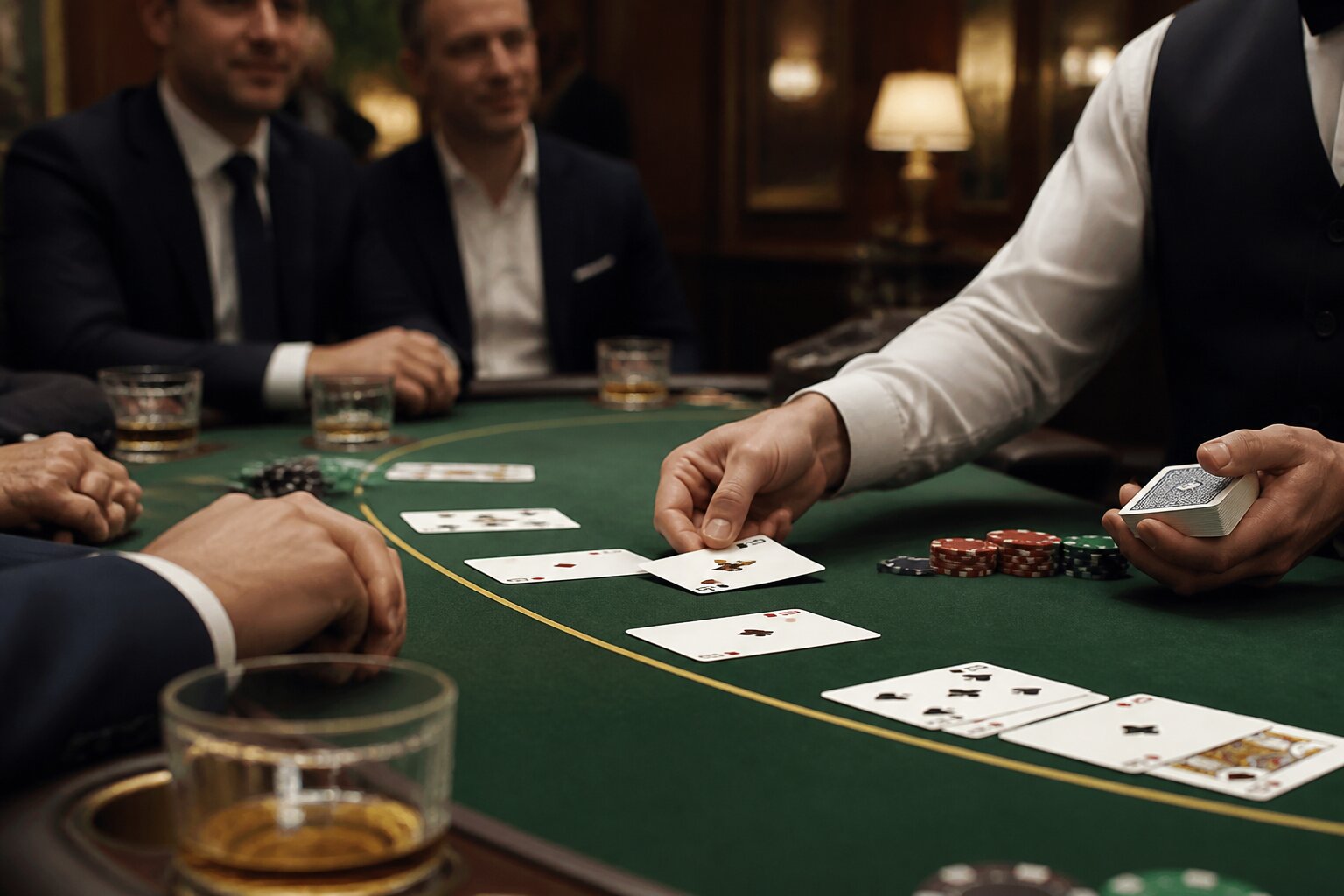
Curious about British Blackjack and the unique twist the seven-card rule brings? This guide strips away pub tales and confusion to explain how the game actually works and why those special multi-card hands matter.
Whether you’re new to the game or have played casually, you’ll find clear explanations of rules, hand rankings and common misconceptions. Read on to learn how the seven-card element changes strategy and what to watch for at the table before you join a round.
Next, we’ll look at what sets British Blackjack apart from other Blackjack variants and why that matters for anyone taking a seat.
What Is British Blackjack (7-Card) & How Does It Differ?
British Blackjack is a local variant with a distinctive emphasis on multi-card hands. The most notable feature is the seven-card rule: a player who draws seven cards without exceeding 21 usually wins automatically, provided no other player holds a higher-ranked special hand such as a pontoon (an Ace with a 10-value card).
This changes the rhythm of play compared with standard casino Blackjack. In many casino versions, the focus is simply on reaching 21 or beating the dealer’s visible card; in this British variant, players often pursue small incremental totals that build into five-, six- or seven-card hands. That structure rewards a different set of decisions about when to take another card and when to hold.
Terminology and dealing can also differ. Hands are commonly dealt face down, and terms like “twist” (take another card) and “stick” (hold) are standard in place of “hit” and “stand”. These differences shape tactics and the social feel of the game.
With that context, the next section explains how a round unfolds so you can see how those differences play out in practice.
How to Play British Blackjack: Step-by-Step Rules
A round begins with players placing their bets, then the dealer deals two face-down cards to each player and two to themselves. Players check their own hands in private and then choose whether to twist or stick. The goal remains to have a total as close to 21 as possible without going over, but multi-card hands add extra winning conditions.
Players may continue to twist until they either choose to stick or their total exceeds 21, which means they are bust and lose their stake. Special multi-card hands—five-card trick, six-card win and the seven-card rule—offer additional ways to win that outrank ordinary totals. For example, a five-card trick (five cards totalling 21 or less) will beat a standard three-card 21 in most rule sets.
After players finish, the dealer reveals their hand and plays according to the house rules, often taking cards until reaching a specified minimum such as 16. If the dealer goes bust, the remaining players win. Otherwise, hands are compared and bets are settled according to the ranking of hands in play.
Knowing how the round moves from betting to settlement helps when deciding whether to risk another card or protect a multi-card hand. The next section clarifies the values and rankings you need to judge those decisions correctly.
Key Card Values & Winning Hands
Card values are simple: numbered cards are worth their face value, face cards are worth ten and Aces count as either 1 or 11, whichever benefits the hand.
Key card values:
Ace = 1 or 11
2–10 = face value
Jack, Queen, King = 10
Winning hands in British Blackjack:
- Pontoon: The top hand — an Ace plus any 10-value card. This normally beats all other hands.
- Five-Card Trick: Five cards totalling 21 or less. It usually outranks ordinary totals.
- Six-Card Win: Six cards totalling 21 or less. In many rule sets this ranks above five-card hands but below pontoon.
- Seven-Card Charlie: Seven cards totalling 21 or less. This hand commonly wins immediately unless a pontoon is present, but local rules can vary.
- Standard 21: Any combination totalling 21 with three or more cards; wins against lower totals that are not special multi-card hands.
- Closest to 21: If no special hand exists, the highest total under 21 wins.
Understanding these rankings is vital when weighing whether to take another card, especially since the multi-card hands change what counts as a strong position. The next section looks at myths that often cloud players’ judgement.
Common Myths About British Blackjack
Myths and informal advice can be misleading; clarifying them helps you make better choices at the table.
One widespread belief is that the game is purely chance with no meaningful decisions. In reality, while card distribution is random, players’ choices about when to twist or stick affect outcomes over many rounds, particularly when chasing multi-card hands.
Another myth is that seven cards always guarantee a win. A seven-card hand is powerful, but a pontoon will typically beat it, and some venues rank multi-card hands differently. It’s important to know the specific table rules before assuming any automatic outcome.
People also assume every Blackjack variant uses the same strategies. Because British Blackjack rewards multi-card hands and often uses face-down dealing, strategies that work in other versions may be inappropriate here.
Finally, some players claim card counting is effective in this variant. Frequent shuffling, differing house rules and the prominence of multi-card outcomes limit the usefulness of counting in practice.
These corrections set the scene for a practical view of how the game actually behaves, which we’ll cover next.
Reality: The Facts Behind the Myths
In practice, British Blackjack blends chance with player decisions and local rules. The presence of special multi-card hands alters risk and reward: as a hand grows toward five, six or seven cards, the probability of busting rises, so choices become about balancing immediate safety against the potential value of a multi-card win.
A seven-card hand does not automatically trump every other result; pontoon typically takes precedence, and some tables place five-card tricks above seven cards. Always confirm which rule set applies at the table you join.
Differences in dealing and hand ranking also change the optimal approach. Because many games shuffle decks frequently and emphasise multi-card outcomes, strategies focused on tracking high or low cards are less effective than careful judgement about the number of cards already held and the visible play around you.
These practical realities help explain why the game feels different from other Blackjack variants and why a measured approach to twists and sticks tends to serve players better. With that in mind, the final section covers how to behave at the table so the round runs smoothly for everyone.
Essential Table Etiquette for British Blackjack
Polite, clear behaviour keeps play moving and prevents misunderstandings. Wait your turn; acting out of sequence can disrupt the dealer and other players. Use straightforward signals or short verbal cues when allowed by the house, and keep cards on the table to avoid any appearance of impropriety.
Maintain a respectful tone toward the dealer and fellow players, and keep unsolicited advice to a minimum. Dealers follow strict procedures, so disputes should be handled calmly and, if necessary, escalated to floor staff rather than argued over at the table.
Finally, set personal betting limits and take breaks as needed to keep the experience enjoyable. That practical approach, combined with clear etiquette, helps create a fair and pleasant game for everyone and leaves you ready for your next round.
Play Casino Games at Mega Reel
We’re always pleased to welcome new faces to our site, so why not come and explore the world of casino games with us at Mega Reel? Our friendly team is here to make sure you feel right at home every step of the way.
Getting started couldn’t be easier – simply create an account, make a deposit, and you’ll be ready to play. We look forward to seeing you around and wish you an enjoyable experience with us.
**The information provided in this blog is intended for educational purposes and should not be construed as betting advice or a guarantee of success. Always gamble responsibly.