
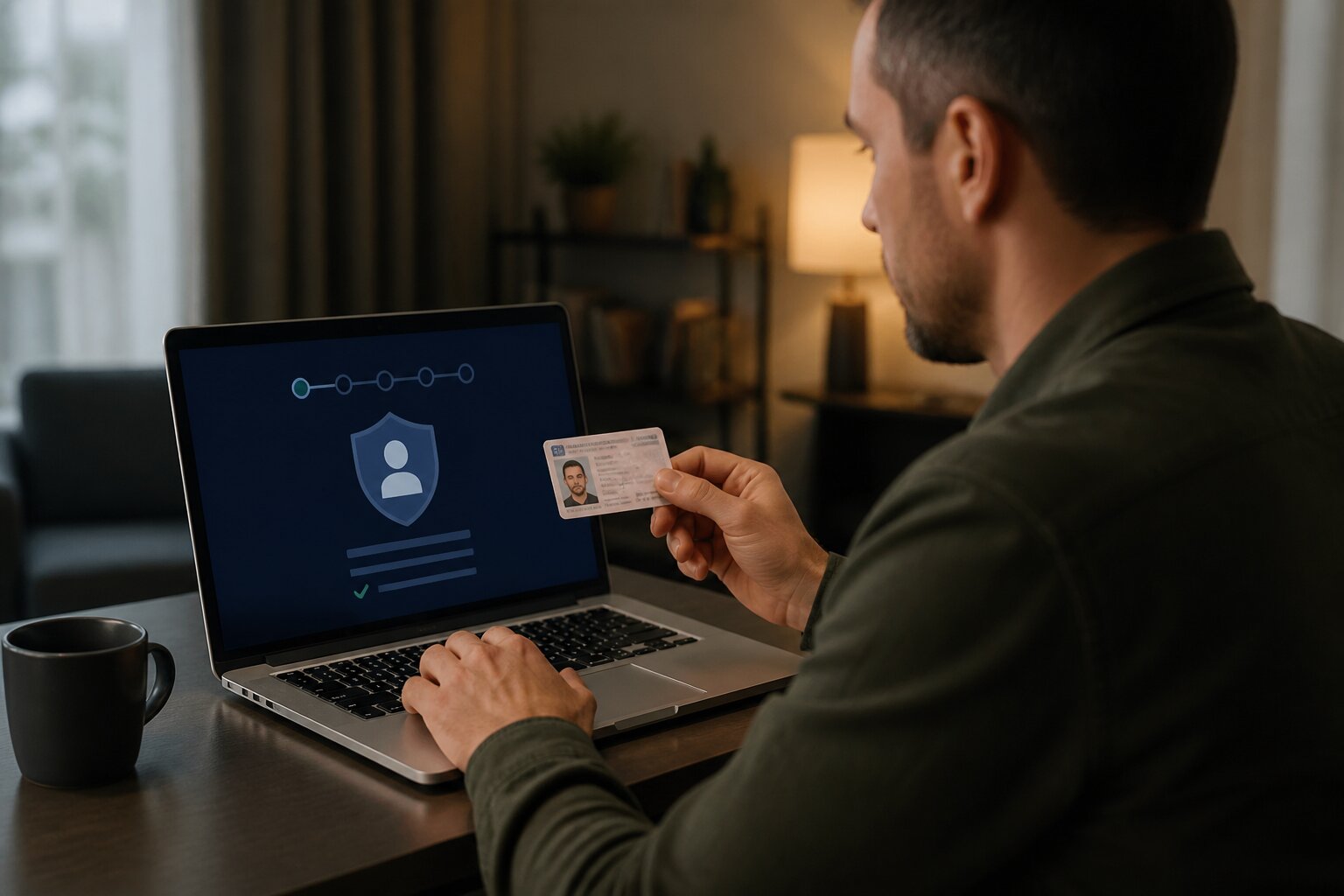
Ever wondered why online casinos suddenly ask for your ID just as things start getting exciting? It can feel like an interruption, but there are clear reasons behind the request.
If you've been asked to upload a passport or driving licence, you’re far from alone. Understanding the verification process makes it easier to see how these checks protect you and the wider player community.
Curious about what happens to your data, what documents are accepted, and why these checks matter? Read on to get a practical, straightforward explanation.
Why Is ID Verification Required at Online Casinos?
ID verification isn’t an optional extra for operators; it’s a legal requirement set out by the UK Gambling Commission (UKGC). All UK-licensed casinos must confirm a player’s identity and age to comply with regulation.
This requirement helps prevent criminal activity such as fraud and money laundering by making it harder to use gambling platforms for illicit purposes. It also ensures that under-18s cannot open accounts and that people who have opted to self-exclude are identified and prevented from playing.
At its core, verification confirms that a person is who they claim to be and that they are legally permitted to play. That keeps the environment fair and compliant with UK law.
How Does the ID Verification Process Work?
The verification process is designed to be as straightforward as possible while meeting regulatory standards.
After you register, the casino will request identity documents at certain points, commonly before a first deposit or before any withdrawal. You will be asked to upload images or scans of official ID and, in many cases, proof of address. These are checked against the details on your account to ensure consistency.
Checks are carried out by trained staff or specialist verification services. If everything matches, your account moves to fully verified status and normal activity resumes. If there are questions, the operator will explain what additional information is needed to resolve them.
This routine step protects your account and the platform as a whole, and once completed it generally removes any restrictions on your account.
What Documents Do Online Casinos Accept for Verification?
Casinos accept a standard set of documents to confirm identity and address, all aligned with UKGC requirements. Operators must follow strict rules to prevent money laundering and to protect players, so the documents you are asked for are specific and reasonable.
For identity verification, common accepted documents include:
- Passports
- Driving licences
- National identity cards
These should be current, clearly legible and in full colour. Photocopies, scans or photos must show all four corners of the document and any security features, and the name, date of birth and document number must be visible.
To confirm address, casinos typically ask for:
- Recent utility bills
- Bank or credit card statements
- Council tax bills
Address documents are usually required to be recent, commonly dated within the last three months, and must show your full name and home address. Screenshots of online accounts are sometimes accepted if they display the same details and date.
Some operators may also ask to see the payment method you used. Examples include a copy or photo of a bank card with sensitive digits obscured, or a screenshot of an e-wallet account. Casinos will explain why a particular document is required and what portion you should hide for security, such as the middle digits of a card and the CVV code.
Most sites provide guidance on file formats and upload limits, and many allow documents to be submitted securely through your account. If you are unsure which document to send or how to obscure sensitive information, contact the casino’s customer support before uploading.
Is It Safe to Share My ID With an Online Casino?
Sharing ID with a licensed operator is safe when the site follows regulatory and data-protection rules.
Documents are uploaded over encrypted connections so the information cannot be read by unauthorised parties while in transit. Storage and handling must comply with UK data protection law, including the General Data Protection Regulation (GDPR), and staff who access these files are subject to strict controls.
Licensed casinos are subject to audits and must publish privacy information that explains how your data is used and retained. If you want exact details, the privacy notice will set out retention periods and how the data is protected.
Knowing how your information is handled can make the process feel less intrusive and more transparent.
How Does Verification Prevent Fraud and Underage Gambling?
Verification checks play a practical role in protecting both players and operators. By confirming identity, casinos make it more difficult for stolen or false details to be used to open accounts, which reduces the risk of identity theft and payment fraud.
Checking age is equally important. Verification ensures that those under 18 cannot create accounts, keeping minors away from gambling products. These protections maintain a safer environment and uphold the regulatory standards the industry is required to meet.
Verification also helps spot unusual account behaviour that could indicate misuse, enabling operators to take appropriate action.
What Role Does Verification Play in Responsible Gambling?
Verification supports safer play by allowing operators to enforce self-exclusion and other protective measures. When accounts are verified, it becomes possible to identify players who have registered a voluntary ban or those who need additional protection, and to act in line with regulatory obligations.
These processes are part of a broader framework aimed at reducing harm, offering support where needed, and making sure the operator meets its responsibilities.
What Happens If I Refuse to Provide ID?
Choosing not to supply requested documents will restrict what an operator can legally allow you to do. Accounts may be limited so deposits, play or withdrawals are not possible until verification is complete. In some cases an account may be suspended, or certain features removed, while checks are outstanding.
This is not punitive; it is a consequence of the legal obligations operators must follow to prevent fraud, money laundering and underage gambling. Operators must also comply with regulatory requirements that can include refusing withdrawals or withholding funds until identity and source of funds checks are complete.
If you are reluctant to upload documents, contacting customer support can clarify the exact requirements and the reasons behind them, and may suggest alternative ways to verify your identity. Support teams can explain:
- which documents are acceptable,
- how long checks typically take,
- secure ways to submit information, and
- what will happen to your account and any pending funds while verification is in progress.
Operators should handle your data securely and only use it for the purposes set out in their privacy policy and regulatory duties. If you remain concerned after speaking to support, you can ask about complaint procedures or independent regulatory guidance.
Common Concerns and Myths About ID Verification
There are several recurring worries about ID checks, and addressing them helps clear up misconceptions.
A common fear is that casinos collect personal data for marketing or resale. Licensed operators are bound by data-protection rules and cannot use your documents for purposes beyond verification without your consent. Another misconception is that checks target big winners; in practice verification is a routine procedure applied to all accounts as needed.
Concerns about security are understandable, but regulated sites use encryption and strict internal controls. If anything seems unclear, ask the operator to explain their verification policy and data-handling practices.
To help you decide whether to proceed, support teams can explain retention times and how you can request deletion or access to your data under data-protection laws.
How Can I Speed Up the Casino Verification Process?
You can make the process quicker by preparing valid documents and providing clear uploads from the start. Being organised means fewer queries from the verification team and a faster return to full account use.
When you take photos or scans, pay attention to these points:
- Ensure images are in focus and well lit so all text is readable.
- Show the whole document so no corners are cropped out.
- Include all required details such as your name, photo and relevant dates.
If proof of address is requested, use a document dated within the period specified by the operator. Accepted documents typically include utility bills, bank statements or official letters; check the operator's list before you submit.
Responding promptly to any follow-up queries helps verification teams complete checks without delay. If a document is rejected, review the reason given and re-upload corrected files straight away.
Being prepared reduces the chance of back-and-forth and lets you resume full account use sooner. Remember to keep copies of documents you submit in case you need to resend them.
Tips for Protecting Your Personal Information Online
Keeping your personal information safe matters whenever you interact with online services, and a few straightforward habits make a difference.
Start by using strong, unique passwords and consider a reputable password manager to keep them secure. Avoid logging in or uploading sensitive documents on public Wi-Fi, and keep devices updated with current security patches and antivirus software. Be wary of unexpected emails and verify any request for information directly with the operator through official channels.
If you ever have doubts about a verification request, contact our support team for guidance. We can confirm whether a request is genuine and advise on safe ways to share documents.
And finally, remember to set and respect your own limits when using gambling services. Keeping control of how and when you play is an important part of a secure experience.
**The information provided in this blog is intended for educational purposes and should not be construed as betting advice or a guarantee of success. Always gamble responsibly.