
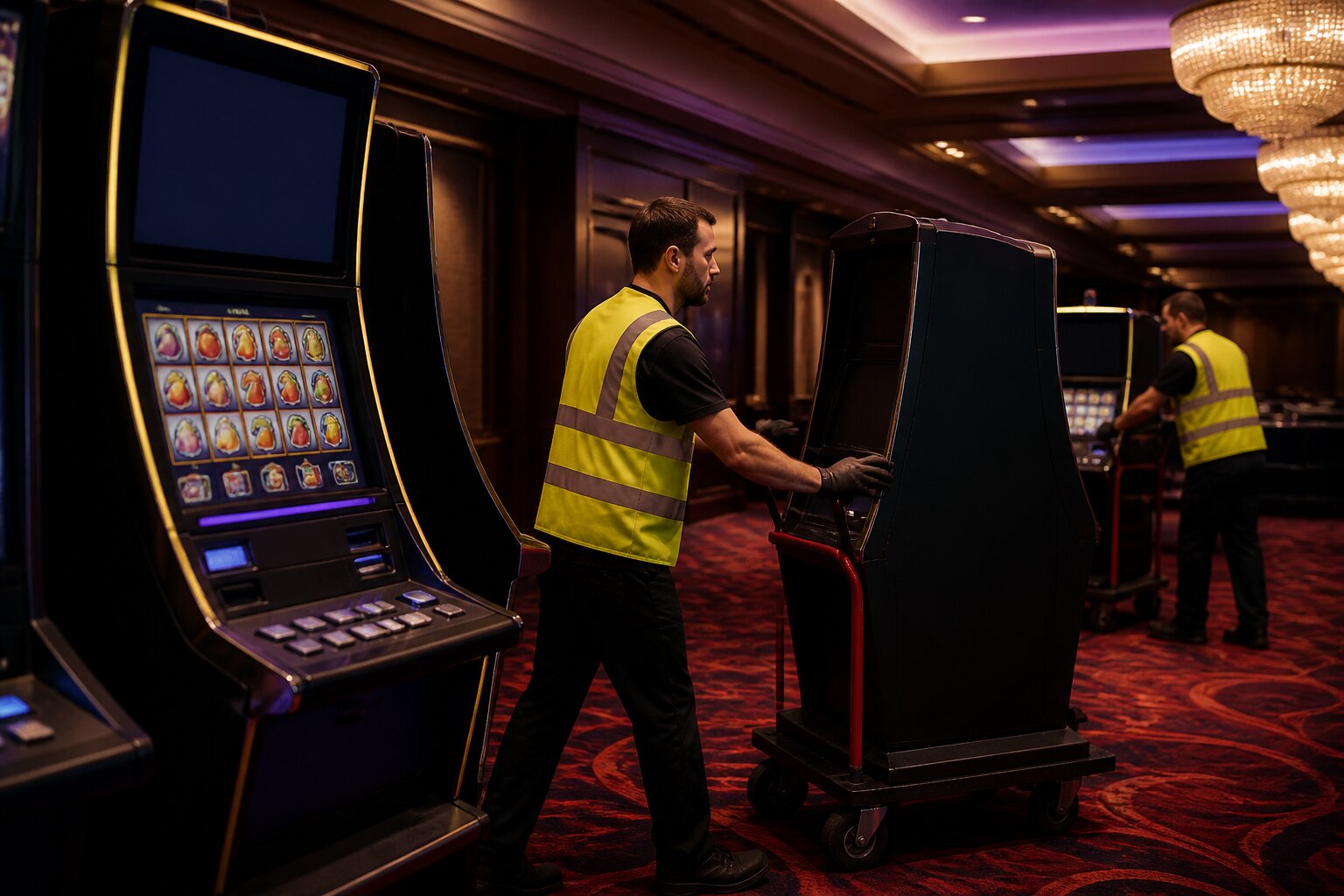
Ever visited your favourite casino and noticed your go-to slot machine has vanished? You’re not alone—many players find the sight puzzling. Machines are rotated, updated or withdrawn for straightforward business and regulatory reasons rather than mysterious motives.
Slots come and go because of law changes, shifting player tastes, maintenance needs and technological upgrades. This article walks through the main reasons machines disappear, how rules influence those decisions, and what happens to removed machines so you can understand the process behind the scenes.
Read on to learn the practical forces that shape the casino floor and what those changes mean for players and operators alike.
Common Reasons for Slot Machine Removal
Slot machines are replaced for clear, practical reasons that balance regulatory obligations with business sense. Legal or technical standards can change, leaving older machines out of compliance; when that happens, removal is often the only option. Low player demand is another straightforward factor—floor space is limited and operators want games that attract attention.
Technical problems also play a part. As machines age, repairs become more frequent and spare parts scarcer, making refurbishment uneconomical. At the same time, casinos refresh their offering to keep the selection appealing and contemporary, installing titles that better match current player preferences.
These operational considerations often overlap: a machine may be both unpopular and costly to maintain, which makes replacement the sensible choice. Next, we’ll look at the specific ways regulation governs those choices and why compliance drives many removal decisions.
How Do Regulations and Gaming Laws Affect Slot Replacement?
Regulation sits at the heart of why machines are removed. In the UK, operators must ensure every device meets technical standards that protect players and maintain game integrity. When regulatory guidance changes, machines may need software patches, hardware updates or complete withdrawal if they cannot be brought up to the new requirements.
Licensing conditions demand accurate disclosure of game information, functioning age-verification and self-exclusion tools, and reliable recording of activity for audits. If a slot cannot provide the necessary data or meet the functional standards, it must be taken out of service to protect both players and the operator’s licence.
Compliance is not optional: failure to address non-compliant machines can lead to sanctions. With that in mind, the next section explains how changes to payout settings or reporting can trigger removals as part of staying within the law.
Understanding Slot Machine Payout Changes
Payout settings are a technical part of a slot’s configuration that affect how it performs over time. In the UK, slot machines must clearly indicate a Return to Player percentage, reflecting the proportion of stake money returned to players on average across long play. These figures are governed by manufacturers’ settings and regulatory rules.
If a software update, manufacturer change or new regulatory requirement alters a machine’s payout configuration, the operator must ensure the device still conforms to the permitted range. When that is not possible, removal or replacement follows. Changes to payout settings are therefore a compliance matter rather than a reaction to individual outcomes.
How payouts influence which machines stay on the floor also depends on popularity. A compliant machine that performs poorly in attracting players is still likely to be replaced in favour of a title that better uses valuable floor space.
How Payout Rates Influence Removal Decisions
Operators monitor machines to ensure their payout settings remain within permitted standards. When a machine cannot be updated to meet a new minimum or expected configuration, removing it preserves the integrity of the gaming offer and protects the operator’s licence. This process is technical and documented, with any updates applied across machines where permitted.
The Role of Popularity and Player Demand
Popularity is a commercial metric: machines that draw consistent play are worth retaining even if they require occasional updates. Conversely, titles with low engagement are prime candidates for replacement, especially when newer games promise higher use of licensed space. Popularity therefore works alongside compliance and technical viability when decisions are made.
With the rules and payouts covered, it helps to consider how the physical layout of a casino influences which machines are kept and which are moved out.
Casino Floor Optimisation: Why Does Layout Matter?
The way machines are arranged affects both customer experience and the operator’s ability to meet regulatory obligations. Every device takes up space, so decisions about placement or removal are made to offer a balanced selection while ensuring access to information and support where required.
Operators aim to provide a varied range of games and clear signage so players can make informed choices. Machines that see little play are replaced by titles that better use the area and improve the overall offer. Thoughtful layout changes can also make monitoring and maintenance more efficient, helping staff spot issues and apply updates quickly.
Refreshing the floor is therefore both a commercial and a practical exercise. With space managed to match demand and compliance needs, the next section looks at how technology accelerates these changes by making older machines obsolete.
Technological Advances and Outdated Machines
Technology drives much of the churn on a casino floor. Modern machines offer more robust security, better reporting and integrated player tools, which help operators meet regulatory standards more effectively than older hardware. Improvements in software architecture also make it easier to demonstrate compliance to regulators and to react quickly when policy or reporting requirements change.
Upgrading to networked and digital machines allows centralised monitoring, faster deployment of software updates and improved transparency. These systems simplify compliance checks and reduce downtime by enabling remote diagnostics. Remote access can flag issues early and often resolve problems without an engineer attending site, so standalone, ageing machines that cannot be upgraded are often retired in favour of equipment that can be managed centrally.
The Shift to Digital and Networked Slots
Networked machines provide real-time data on performance and compliance, which helps operators keep the floor functioning within the required standards. They can push updates for reporting features, adjust display information and manage responsible-play functions centrally, making enforcement and oversight smoother. Linking machines to management systems also supports consistent player protection measures, such as centrally controlled time limits or spend alerts, which are easier to audit and maintain.
The move to digital platforms also enables better analytics for both operators and regulators. Operators can review aggregated performance and fault data to plan maintenance and floor layout, while regulators can be provided with clearer evidence of compliance and responsible-play activity when required.
Removal Due to Hardware and Maintenance Issues
Physical wear, failing components and obsolete parts make some machines impractical to keep. Mechanical failures can become more frequent as equipment ages, and finding replacement parts for older models is often costly and time consuming. When maintenance costs outstrip the value of keeping a device in service, replacement becomes the sensible route.
Removing ageing units reduces the risk of technical faults and supports a consistent, manageable environment for staff and players. A modern fleet also tends to offer fewer unscheduled outages and a more uniform experience across the floor, helping staff to focus on customer service and compliance rather than constant repairs.
Advances bring clear benefits, but that does not always mean new machines change the game itself. The next section explores what new hardware means for players.
Are New Slot Machines Always Better for Players?
Newer machines generally deliver clearer displays, more reliable operation and faster updates, which improve the playing environment. Centralised systems help ensure required information—such as game rules and payout percentages—is accurate and up to date, and that tools for managing play are functioning as intended.
Those operational improvements do not alter how a game’s long-term performance is configured; they make compliance and transparency easier to maintain. In short, newer machines tend to offer a more dependable experience and reduce technical interruptions, but they do not change the underlying design of a game’s return mechanics.
Operators focus on reliability and clarity to meet regulatory duties and to provide a stable environment. Next, we’ll follow removed machines to see how they are handled afterwards.
What Happens to Old Slot Machines After Removal?
When a machine is taken off the floor it follows a regulated decommissioning process. Many units go back to manufacturers for refurbishment, software upgrades or redeployment in appropriate markets. Others are dismantled so components can be recycled or disposed of in line with environmental regulations.
Before any transfer or reuse, data is securely erased to prevent retention of operational or player-related information. Resale or redeployment is only permitted into properly regulated markets; machines cannot simply be put into unregulated circulation.
This controlled handling preserves system integrity and supports environmental responsibilities while ensuring that retired machines cannot be misused. Having covered where removed machines end up, the next section dispels a few persistent myths about why machines go.
Common Myths
A widely repeated belief is that machines are removed after a large payout to stop further wins. In reality, removals are grounded in compliance, maintenance and commercial considerations rather than reactions to individual events. Regulations prevent operators from making decisions based on single outcomes.
Another misconception is that retired machines are dumped without oversight. In fact, decommissioning follows clear procedures for data destruction, reuse in regulated markets or environmentally responsible disposal. These steps reduce the risk of machines being used inappropriately and ensure traceability where required.
Environmental and Regulatory Responsibility
The disposal and reuse of machines are carried out with both regulatory and environmental considerations in mind. Components are recycled where possible and any reuse is subject to the same licensing and technical standards that govern active machines. This approach helps prevent equipment entering unregulated channels and aligns with broader waste-management practices.
Ultimately, the removal of a slot is a practical decision influenced by regulation, maintenance needs and player demand. Operators replace or withdraw machines to maintain a compliant, safe and well-functioning gaming environment, with clear processes for what happens next.
**The information provided in this blog is intended for educational purposes and should not be construed as betting advice or a guarantee of success. Always gamble responsibly.