
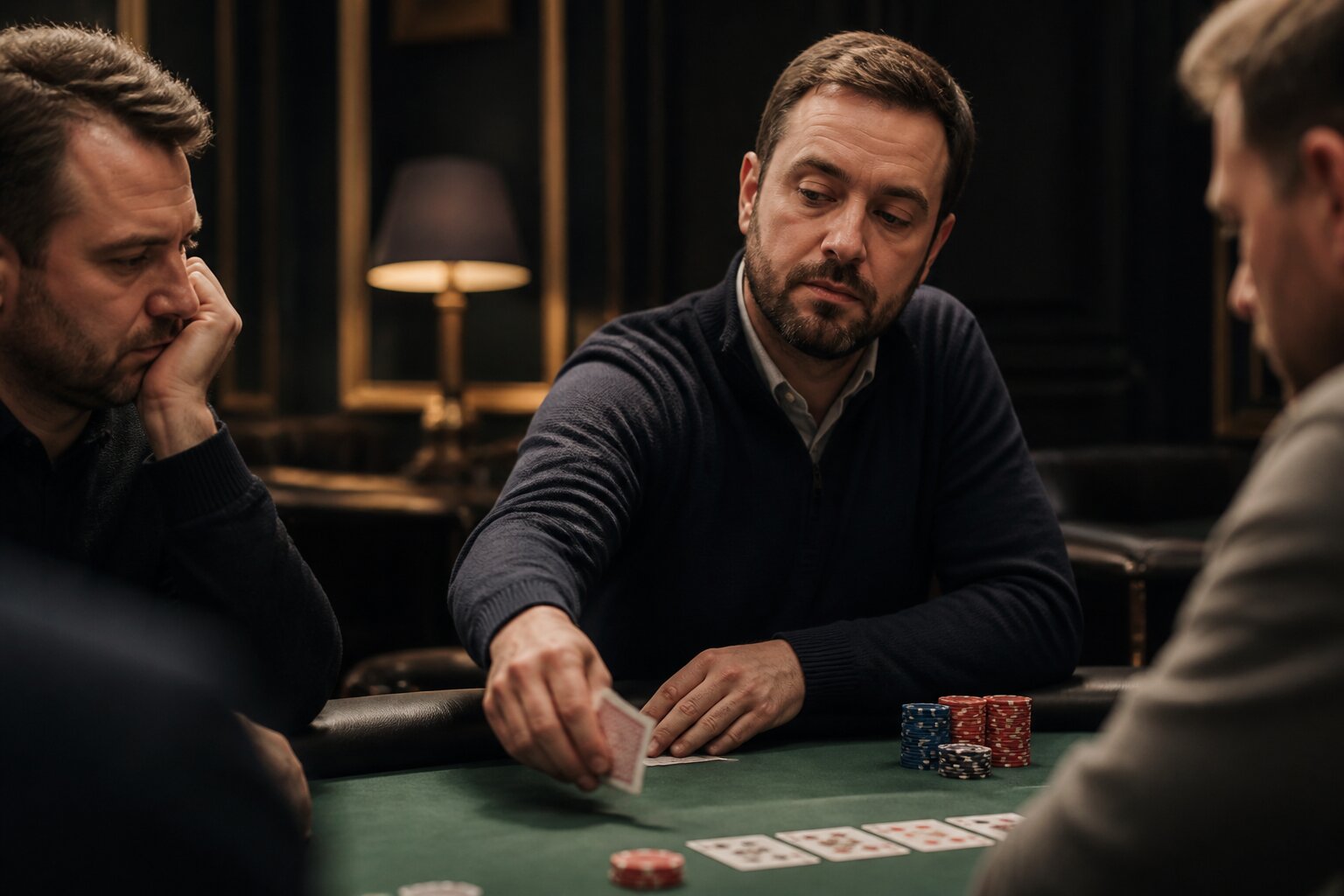
If you’ve played poker or watched a hand, you’ve probably seen a moment that made the table go quiet: one player drags out the reveal of a hand that is clearly the winner. That is slow rolling, and it tends to split opinion quickly.
This article explains exactly what slow rolling is, why players react so strongly to it, and how it affects the game and those at the table. Read on to learn how to spot it, why it’s frowned upon, and what to do if you encounter it.
What Does Slow Rolling Mean in Poker?
Slow rolling is the deliberate act of delaying the reveal of a winning hand at showdown. After the final betting has finished and cards are turned over, a player who slow rolls will make a show of hesitation — pausing, pretending to fold, or otherwise making opponents think the hand might be lost — before eventually exposing the superior cards.
That pause is the problem: it manufactures suspense and can humiliate or frustrate the player who thought they had won. Slow rolling is not an element of strategy; it’s a social manoeuvre that violates the informal code of conduct most players expect. Good table behaviour favours quick, clear action at a showdown so the hand concludes fairly and the game moves on.
This behaviour can feel very different depending on the setting — casual home games, competitive tournaments, and online rooms each carry their own expectations — but the basic breach of etiquette is the same. The next section looks at why some players still do it, whether intentionally or through sloppy play.
Why Do Players Slow Roll?
There are a few reasons a player might slow roll. Some do it to provoke a reaction: the brief spotlight, the embarrassment of the opponent, or simply to unsettle the table. Others mistake dramatic pauses for poker psychology, thinking it will give them an edge by rattling opponents. A third group may simply lack awareness of etiquette and not realise how their behaviour lands.
None of these reasons makes slow rolling acceptable. While the act may satisfy an egotistical impulse in the moment, it usually harms a player’s reputation and can lead to social consequences such as being avoided or asked to leave a game. With that in mind, it’s worth considering how slow rolling affects more than the single hand — the next section explores its impact on players and the flow of a game.
How Does Slow Rolling Affect Poker Games?
Slow rolling disrupts both the mood and momentum at the table. Players who are on the receiving end can feel embarrassed or irritated, and those emotions often linger into later hands, affecting concentration and decision-making. In a competitive environment this can influence performance; in a casual game it can spoil the atmosphere and reduce enjoyment.
The pause created by a slow roll also interrupts the rhythm of play. Poker relies on a steady tempo so everyone stays engaged; needless delays look petty and waste time, particularly in tournaments, cash games with high traffic, or fast-paced online tables. Where conduct matters, consistent and considerate behaviour keeps the game moving and reduces friction between players.
Understanding how it affects individuals and the group helps explain why the consensus is so strongly against it. The following section gives concrete examples so you can recognise slow rolling when it happens.
Common Examples of Slow Rolling
Slow rolling can take several forms. A typical scenario is an all-in situation where one player quickly turns over losing cards while the other lingers with a clear winner, acting as if they might fold. Another is when two players reach showdown and one reveals immediately, only for the opponent to wait unreasonably long before showing the stronger hand. Online, a player may deliberately wait until the last second of the reveal timer to expose a winning hand.
These examples all share the same feature: an intentional delay that turns the reveal into a spectacle. Knowing these patterns makes it easier to avoid committing the same faux pas and to spot behaviour that should be raised with the dealer or organiser.
If you want to prevent slow rolling at your own table, the next section describes how to conduct yourself so play remains smooth and courteous.
How to Avoid Slow Rolling at the Poker Table
Avoiding slow rolling is straightforward in practice: when holding a clear winner at showdown, reveal it without creating unnecessary suspense. If the winner is obvious, a quick, respectful show acknowledges the opponent and keeps the game flowing.
When uncertain about the result, it’s reasonable to take a short moment to check cards, but that pause should be authentic, brief and free of theatricality. Awareness of the table’s pace and the feelings of other players helps maintain a welcoming environment and reduces the chance of disputes.
If you play frequently with the same group, setting simple ground rules about showdowns and conduct can also prevent misunderstandings and keep the focus on the game rather than personalities. That said, myths about slow rolling persist — the next section clears up the most common ones.
Myths & Misconceptions About Slow Rolling
A common myth is that slow rolling is harmless banter or part of a normal poker persona. In most groups it’s not taken lightly, and the social costs usually outweigh any fleeting satisfaction. Another mistaken belief is that slow rolling is a clever tactic that unsettles opponents; while it might provoke a reaction in the short term, it rarely produces a tactical advantage and can damage long-term relationships at the table.
Some assume slow rolling is acceptable among friends; even in casual settings, respect matters, and a single unpleasant incident can sour the dynamic. Understanding the real effects of the behaviour — social friction, disrupted play and damaged trust — makes clear why it is generally rejected. If slow rolling does occur, the next section explains constructive responses.
What Should You Do If Someone Slow Rolls You?
When faced with a slow roll, the best course is to stay composed. Reacting angrily or publicly humiliating the other player tends to escalate the situation and undermines the tone of the game. Instead, maintain a calm demeanour and let the hand finish.
If the behaviour is a one-off, addressing it quietly with the player later usually suffices. Where slow rolling becomes a pattern or occurs in a structured setting, bringing it to the attention of the dealer, organiser, or support team is appropriate; they can enforce table rules or apply sanctions if necessary. Taking measured action preserves the integrity of the game while avoiding unnecessary confrontation.
The final section pulls together why avoiding slow rolling matters for everyone at the table.
Summary: Why Avoiding Slow Rolling Matters
Avoiding slow rolling keeps poker fair, courteous and enjoyable. Prompt, honest showdowns protect the social fabric of the game, reduce tension, and keep play moving at a comfortable pace. Players who respect these norms help build trust and encourage others to keep returning to the table.
Good conduct may not be written into the rules, but it shapes every session more than any single hand. By choosing respectful behaviour at showdown, players help ensure poker remains a game people want to play.
**The information provided in this blog is intended for educational purposes and should not be construed as betting advice or a guarantee of success. Always gamble responsibly.