
Ever fancied giving poker a go, but not sure where to start? You’re not alone. Poker can sound a bit intimidating at first, with all its hands, bets, and table talk. But once you grasp the essentials, it’s straightforward to join a game and enjoy the experience.
This guide is for complete beginners and covers the core rules, common terms, and the most played variants. No technical maths — just clear explanations and practical examples to help you feel confident at the table.
Whether you’re hoping to play casually with friends or try a low-stakes game, the basics you learn here will get you going. Read on to understand how hands are formed, how rounds flow, and what to watch for when you’re deciding what to do.
What Is Poker & Why Is It Popular?
Poker is a card game where players compete to win chips or money by making the best hand or convincing others to fold. There are many versions, but most follow similar betting rounds and hand rankings. The mix of decision-making and unpredictability is what draws people in.
Historically, poker grew from social games in the 19th century to organised events and televised tournaments. Today it’s played in homes, casinos and online, so it’s easy to find a table that matches your comfort level and experience.
The appeal comes from the strategic challenge and the social interaction. Cards vary from hand to hand, so good decisions matter over time. Learning the rules and recognising common situations will make the game more enjoyable and help you improve.
If you’re ready to start, take it step by step and pick one popular variant to focus on first.
1. Learn the Basics
Begin by learning the core rules that appear in most poker games. Focus on the essentials so you have a reliable foundation before moving on.
Key items to understand include:
- how hands rank from highest to lowest,
- how betting rounds progress,
- what common terms mean and how they are used in play.
Texas Hold’em is a common starting point because the structure is easy to follow and tables are widely available. Its simple format makes it straightforward to learn how community cards and hole cards interact.
It also helps to set personal limits before you play. Decide how much time and money you are comfortable spending and stick to that. Treat poker as entertainment and avoid chasing losses; sensible limits keep the game enjoyable and reduce the risk of harm.
A short note before the next section: understanding terms and hand ranks will make watching a game far more useful, so the next part explains those at your own pace.
2. Watch a Few Games
Seeing a game in action helps the rules click. Watch a live table or a recorded session and pay attention to different parts of play so you can match what you have learned to real behaviour.
Look out for:
- how betting rounds unfold,
- how players react to different community cards,
- how the showdown resolves ties and reveals hands.
Observing will make the flow of play easier to follow when you sit down to play yourself, and it can highlight practical details that rules alone do not convey.
3. Practise with Low Stakes or Play Money
Starting with small amounts or play-money tables reduces pressure and lets you experiment. You can try common strategies without risking much and gradually move up when you feel ready.
Low-stakes practice gives you space to make mistakes and to learn from them. It also helps you test how comfortable you are with different styles of play and with the speed of live cash games or tournaments.
4. Set Yourself Limits
Deciding your limits ahead of time helps you stay in control. Limits can cover different aspects of your play:
- money: how much you will lose in a session,
- time: how long you will play,
- session volume: how many hands or rounds you will play.
Follow your limits—consistently doing so is a key part of playing sensibly and maintaining a responsible approach.
5. Focus on the Fun and Learning
Early games are for learning. Concentrate on decisions, notice other players’ tendencies, and treat mistakes as lessons.
Curiosity and slow improvement will serve you far better than trying to rush into higher-stakes play. Keep the emphasis on enjoyment and personal progress, and reassess your limits and goals as you gain experience.
Key Poker Terms
To feel comfortable at the table, learn the terms you’ll hear most often. These terms describe the structure of play and what options each player has during a hand.
Blinds are forced bets placed before cards are dealt. The small blind and big blind start the action and ensure there is something in the pot to play for.
Check means to pass your turn without betting, provided no one has opened the betting in that round. Call is matching the current bet to stay in a hand. Raise increases the current bet, making it more costly for others to continue. Fold ends your involvement in the hand and gives up any claim on the pot.
The pot is the total of bets placed during a hand. Flop, turn and river are the shared community cards dealt face-up in games like Texas Hold’em: three cards on the flop, a fourth on the turn, and a fifth on the river. Showdown happens when remaining players reveal their cards to determine the winner.
Understanding these terms will help you follow a game and make decisions confidently.
Poker Hand Rankings
Knowing which hands beat which is fundamental. The rankings below apply to most poker variants and are always the same, so keep them in mind as you play.
Royal Flush: Ace, King, Queen, Jack and 10 of the same suit.
Straight Flush: Five consecutive cards of the same suit, for example 7, 8, 9, 10, Jack of hearts.
Four of a Kind: Four cards of the same rank, such as four 5s.
Full House: Three of one rank and two of another, like three 7s and two Queens.
Flush: Any five cards of the same suit, not sequential.
Straight: Five cards in sequence in mixed suits.
Three of a Kind: Three cards of the same rank.
Two Pair: Two cards of one rank and two of another.
One Pair: Two cards of the same rank.
High Card: When no combination forms, the highest single card determines the value.
These rankings guide every showdown and underpin most strategic choices at the table.
How Hands Are Dealt
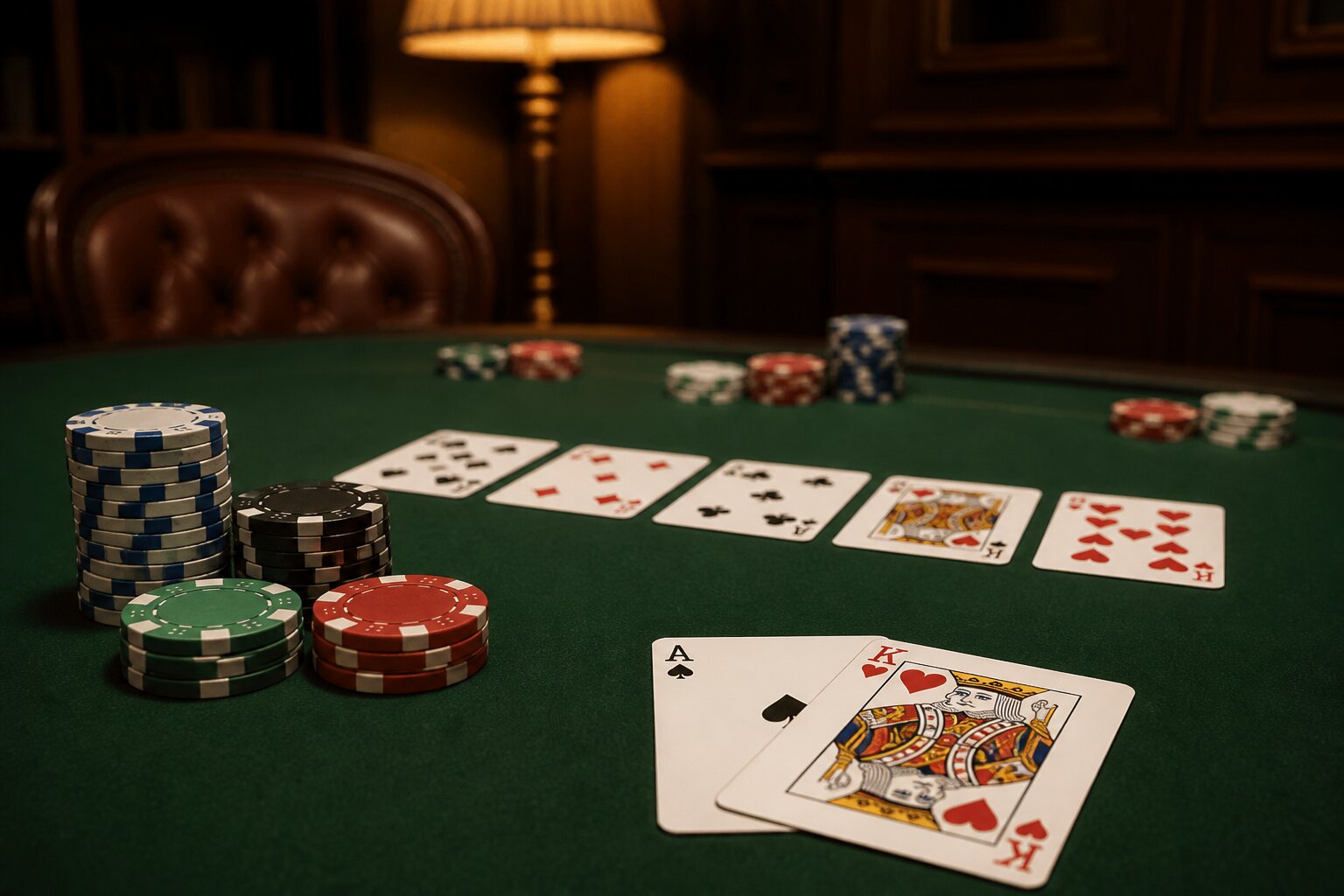
A hand has a clear rhythm: cards are dealt, betting happens in stages, shared cards appear (in community-card games), and a winner is determined. In Texas Hold’em, for instance, each player receives two private cards, followed by a round of betting. The dealer then places three community cards (the flop), followed by another betting round, then the turn and river with betting after each.
Players combine their private cards and the community cards to form the best possible five-card hand. The betting rounds give players chances to build the pot, protect a strong hand, or force opponents to fold. Observing how the pot changes and when players act provides clues about hand strength without needing to know anyone’s cards.
Common Actions: Bet, Call, Raise, Fold
Each betting round gives players clear options that shape the hand’s outcome. Betting puts chips into the pot. Calling keeps a player in by matching the current amount on the table. Raising increases the stake and applies pressure. Folding ends a player’s interest in the current pot. These actions are the building blocks of every decision you’ll make at the table.
Try to view each decision as weighing the information available, the likely strength of opponents’ hands, and how the pot fits with your current stack size and objectives.
Popular Poker Variants
If you want to try different styles, there are several approachable variants with distinct strategies.
Texas Hold’em: Two private cards per player and five community cards. It’s a common introduction because the community card structure creates many situations that are easy to follow.
Omaha: Similar to Hold’em but each player gets four private cards and must use exactly two with three community cards. This changes the hand-building possibilities and often leads to larger showdowns.
Five Card Draw: Each player receives five cards and may swap some before a final betting round. It’s straightforward and a good option for a simple home game.
Seven Card Stud: Players receive a mix of face-up and face-down cards without community cards. It’s more focused on individual card-reading and position awareness.
Trying a couple of variants helps you find the style you enjoy and exposes you to different strategic ideas.
Is Poker About Skill or Chance?
Cards are dealt randomly, so short-term outcomes vary from hand to hand. Individual deals can be unpredictable and swing in any direction, which is why short sessions can feel like luck plays the main part.
Over many hands, though, sound decisions tend to produce better results than random play. Consistent, correct choices about:
- betting size and frequency,
- seat position relative to the dealer,
- reading and exploiting opponent tendencies,
help skilled players convert small edges into a long-term advantage.
Understanding the difference between single-hand variability and long-term decision quality is useful. Focus on improving your judgement, hand selection and timing rather than expecting any particular hand to succeed. Accepting variance and thinking in terms of many repetitions helps keep emotions in check.
A helpful next step is to study common mistakes so you can avoid them early on. Examples to watch for include:
- playing too many weak hands out of position,
- making predictable bet sizes or timing tells,
- failing to adjust to different opponents,
- neglecting bankroll management and session limits.
Remember that even skilled play involves risk, and outcomes are never guaranteed. Play responsibly and within limits.
Common Beginner Mistakes
Many novices make similar errors that are easy to correct with attention and practice. Playing too many hands is a frequent one; folding more often and waiting for stronger starting hands conserves chips and reduces awkward post-flop decisions.
Chasing losses by increasing stakes or playing impulsively tends to lead to worse results. A better approach is to stick to your pre-set limits and step away when the session isn’t going well.
Another oversight is ignoring position. Acting later in a round provides extra information about opponents’ choices and makes it easier to control the pot. Not paying attention to other players also wastes valuable information; even when you fold, watching how others behave helps build a picture of their style. Finally, poor bankroll management—playing at stakes that don’t match your funds—creates pressure and often forces poor decisions.
Recognising and addressing these errors early will speed up your progress as a player.
Poker Etiquette
Good manners keep the game fair and pleasant for everyone. Wait your turn to act so the game runs smoothly. Be courteous to other players and staff, and avoid remarks that might upset the table.
Handle chips and cards clearly, and place bets in a way that leaves no doubt about your intentions. Keep conversations friendly but not distracting, since talking can unintentionally reveal information. Try not to slow the game with unnecessary delays, and take a moment to learn any specific house rules before you join a table.
Polite, straightforward behaviour makes poker a more enjoyable experience for all involved.
Where to Play in the UK
There are several legitimate ways to play poker in the UK. Many land-based casinos run poker rooms with cash games and tournaments; check the venue’s licensing and have ID ready for age verification. Online poker sites allow you to play from home, but choose operators that are regulated and follow the law. Friendly home games with other adults are an option too, provided no one is profiting from running them and everyone is over 18.
Wherever you play, set your own limits and take steps to keep the activity enjoyable and within your means.
Play sensibly, build your knowledge gradually, and you’ll find poker to be an entertaining game that rewards patience and clear thinking.
**The information provided in this blog is intended for educational purposes and should not be construed as betting advice or a guarantee of success. Always gamble responsibly.