
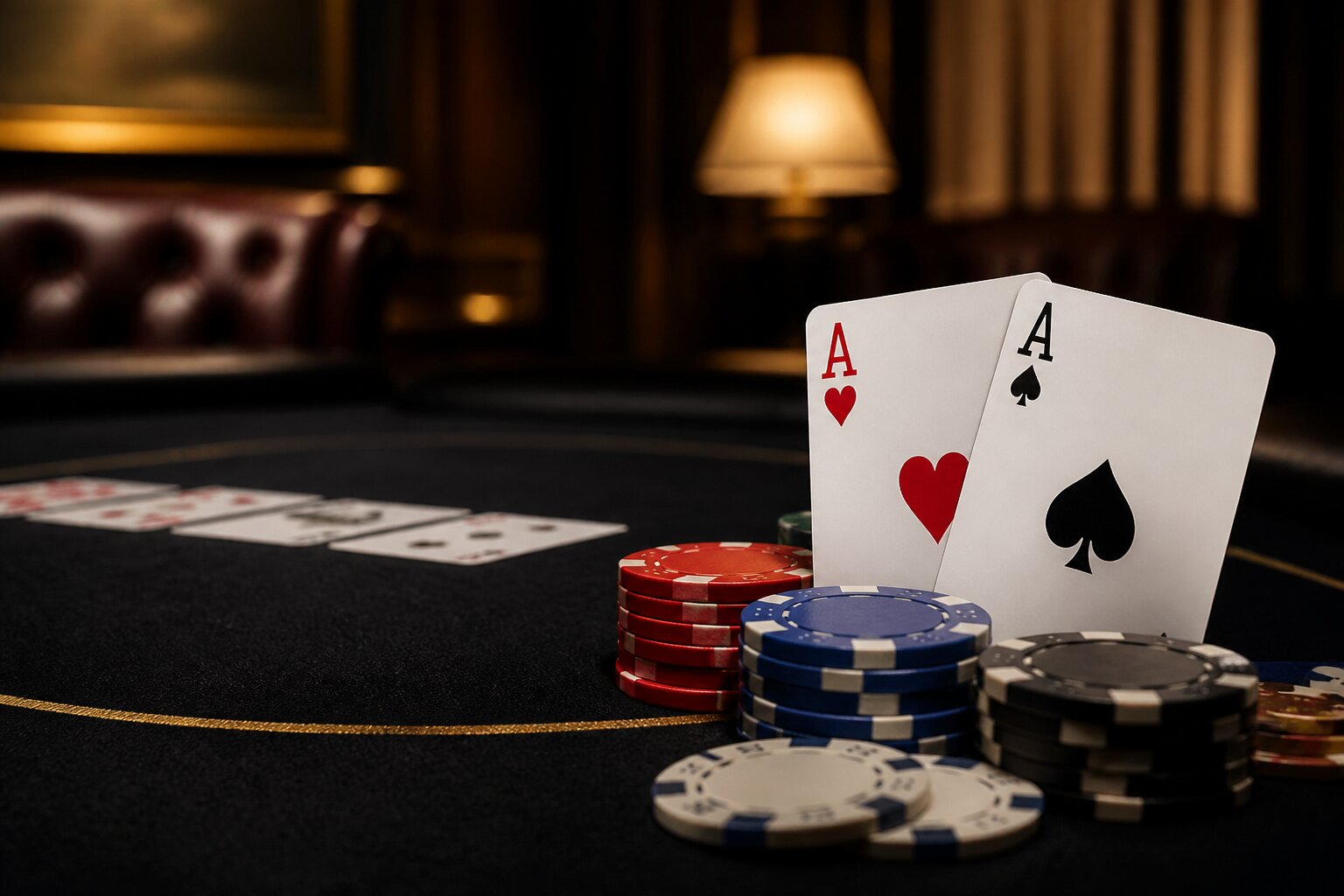
If you’ve spent any time at a poker table, you might have heard the phrase “Pocket Rockets” whispered with excitement. This term captures one of the most powerful moments in Texas Hold’em, and it’s worth understanding what makes the hand special and how best to use it.
Curious about the real odds of being dealt two aces, how they compare to other starting hands, and the practical considerations when you hold them? This guide explains all of that clearly and concisely, with examples and context that will help you make better in-game decisions.
Read on to learn what pocket rockets mean, how often they appear, how strong they are in different situations, and common mistakes to avoid.
What Does Pocket Rockets Mean in Poker?
In poker, “pocket rockets” is a nickname for being dealt two aces as your first two cards in Texas Hold’em or other flop-based games. The word “pocket” refers to your hidden hole cards, and “rockets” is a colourful way to describe the upright shape of the Ace symbol when two aces appear together.
This pair is the highest possible starting hand in Texas Hold’em. That status gives you a clear advantage before community cards are revealed, but what happens after the flop, turn, and river can change the outcome. How you bet and how the board develops are the factors that follow your initial lead.
Many players react strongly to seeing two aces. The key is to temper that excitement with measured decisions so you can protect the value of the hand as the betting unfolds.
Why Are Pocket Rockets Called Aces?
The nickname comes from a combination of appearance and shorthand language at the table. Each Ace’s upright symbol resembles a slim rocket, and when two are side by side in your hole cards the image sticks. Players also shorten the phrase to “pocket aces,” which is the literal description.
Beyond imagery, the term has practical use. Saying “pocket rockets” or “pocket aces” quickly communicates your starting hand without spelling out the exact cards, which is handy in conversation and commentary. The shorthand is useful in both live games and broadcasts, where speed and clarity matter.
The name is now common in both casual and professional play and is widely recognised across poker communities. Having pocket aces is a strong starting hand, but it is not a guarantee of winning a hand, and game outcomes depend on many factors. This explanation is for information only and is not advice on how to play.
How Rare Are Pocket Rockets in Poker?
Pocket rockets are one of the least frequent starting hands you will receive. In Texas Hold’em, the probability of being dealt two aces as your hole cards is 1 in 221, or about 0.45 percent. That means, on average, you will see the hand roughly once every 220 to 221 deals.
When games deal more hole cards, such as Omaha, the maths shift because you receive four cards instead of two. The chance of holding two aces among those four increases, but starting specifically with just a pair of aces among your first two visible cards remains uncommon.
These are purely statistical facts about card combinations; they do not imply any predictable pattern from hand to hand. Each deal is independent and governed by the same mathematical probabilities.
Pocket Rockets Odds: How Often Will You Get Them?
The chance of receiving pocket rockets stays constant regardless of table size or the game’s stakes. In Texas Hold’em, you always face the same 1 in 221 probability for a two-ace starting hand.
If you move to variants with more hole cards, the interpretation of “pocket rockets” can change. In Omaha, for example, players often look for exactly two aces among four cards, which is a different calculation and slightly more likely than in Hold’em. In stud games the structure and timing of card distribution affect how you should value those aces, but the initial rarity of two aces as your early cards persists.
Understanding these odds helps set realistic expectations when the hand arrives and informs how aggressively to protect it.
Assessing the Strength of Pocket Rockets at Different Poker Tables
Pocket rockets are the top starting hand in Texas Hold’em, but their practical strength is influenced by table context. At a short-handed table, such as six players, the pair tends to perform better because there are fewer opponents who can outdraw you.
Conversely, at a full table with nine or ten players, the chance that someone can hit a strong made hand or a coordinated draw increases. That does not make aces weak, but it changes how you approach betting and pot control. Facing multiple opponents typically means the board has more potential to produce straights, flushes, or sets that can overtake your aces.
Player style matters too. Tight tables that fold frequently will often allow you to extract value from aces with straightforward betting. Aggressive tables where many players see the flop can require a different defensive posture, and you may need to adjust your bet sizes or willingness to concede when the board turns dangerous.
How Do Pocket Rockets Compare to Other Starting Hands?
Pocket rockets sit at the top of the starting-hand hierarchy in Hold’em. No other pair, including kings or queens, has a better pre-flop winning expectancy against a random hand. Hands like Ace-King or lower pairs are strong in their own right, but they are statistically less favoured when facing two aces.
The important practical point is relative advantage. Aces give you the best head start, but several common holdings—suited connectors or small pairs—can still outdraw you by making straights, flushes, or sets. That possibility is why hand reading, observing betting patterns, and recognising board texture remain essential even when you start with aces.
Common Myths About Pocket Rockets
A number of persistent myths follow pocket rockets; separating myth from fact sharpens your decision making. One mistaken belief is that pocket rockets will always win. While they are the strongest starting hand, the community cards and opponents’ holdings can change the outcome.
Another myth suggests previous wins or losses affect your next hand’s chances. Statistical independence means each deal is governed by the same probabilities, so past results do not influence future ones. Superstitions—charms, rituals, or seat choices—do not alter the mathematical odds of card distribution.
Relying on accurate information and sound judgement will always outperform belief in myths or rituals when you are at the table.
What Should You Watch Out for With Pocket Rockets?
There are specific risks to manage with pocket rockets. Overcommitting chips early on can be costly if the board begins to favour straights or flushes. A board with three cards of the same suit or a coordinated sequence becomes risky because multiple opponents may hold connecting combinations.
Attachment to the hand is another common trap. Confidence is useful, but stubbornly calling large bets when the betting patterns and board texture suggest you are beaten often erodes your stack. Folding strong-looking hands in the right spot is a disciplined choice that preserves your ability to play future hands.
Before you sit down, set clear betting boundaries for the session and keep them in mind. Making measured, context-aware decisions helps you extract value from pocket rockets when they are best placed and cut losses when the situation turns unfavourable.
Summary: Are Pocket Rockets the Best Hand?
Pocket rockets, two aces as your starting hand, are statistically the strongest way to start in Texas Hold’em. They give you the highest pre-flop chance of finishing ahead of a single opponent and a strong advantage in many multi-way pots.
Strength with Limits
Even at their best, pocket aces are not invincible. The community cards and opponents’ actions can erase your advantage, so adapting your play to table dynamics and board texture is essential.
Play Responsibly
Keep your play sensible: manage your bankroll, set limits, and make decisions based on the cards and the context at the table. That approach helps you get the most from premium hands while preserving the ability to play another hand well.
**The information provided in this blog is intended for educational purposes and should not be construed as betting advice or a guarantee of success. Always gamble responsibly.